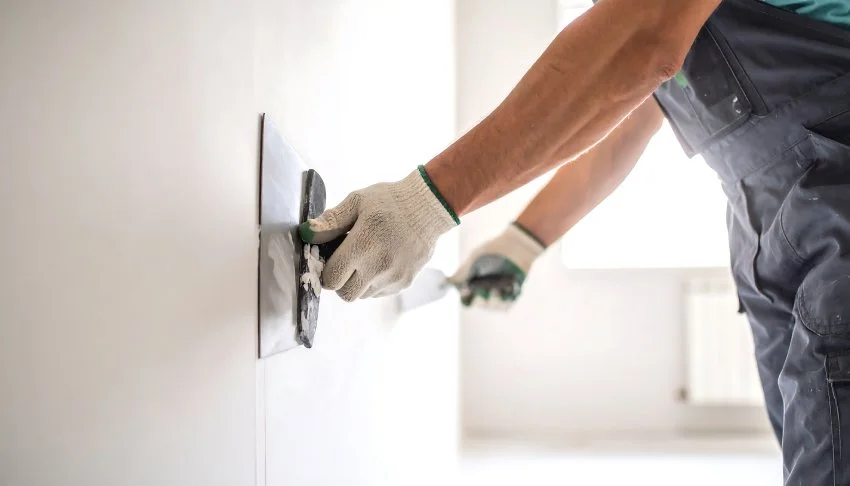
If you have ever patched a hole or painted a room, you have worked around drywall. But many homeowners still ask what drywall is and why almost every modern house depends on it. Drywall forms the flat walls and ceilings you see in living rooms, bedrooms, hallways, and garages. It creates smooth surfaces that painters can finish cleanly and consistently.
Drywall is made from a gypsum core pressed between two sheets of thick paper. Panels are fastened to wood or metal framing, then taped, mudded, sanded, and painted. Once finished, you get solid walls that look seamless. That simple system replaced plaster because it installs faster and costs less.
Advantages of Drywall
Homeowners often notice cost first, but there are several real advantages of drywall that matter during everyday use and maintenance.
Installs quickly; most rooms can be hung in one day
Lower labor cost than plaster
Smooth surface for painting
Easy to patch small holes
Fire-resistant due to gypsum content
Good sound reduction between rooms
Because repairs are straightforward, contractors can fix damage without rebuilding the wall. That matters when you hang shelves, mount TVs, or move furniture and make mistakes. You rarely need a full wall replacement.
Types of Drywall Damage You Should Know
Understanding the common types of drywall damage helps you know when a repair is small and when you need a professional.
Small holes: Usually caused by nails, screws, or anchors. These are quick patches using filler and sanding.
Medium holes: Often from door handles or accidental impact. These require mesh patching and compound layering.
Cracks: Appear from house settling or poor tape work. They will keep returning if not repaired correctly.
Water damage: Leads to staining, swelling, and soft walls. This always needs the removal of affected material.
Corner bead damage: Edges chip easily when hit. Repair requires reshaping and refinishing the corner.
Texture mismatch: After a repair, the texture often looks different from the rest of the wall and must be blended before painting.
Many homeowners try patch kits but end up calling house painters in Denver after the repair shows through the paint. Matching texture and sheen is harder than filling the hole.
Why is Drywall Used?
You might wonder why drywall is used instead of stronger materials like wood panels. The answer comes down to safety, cost, and finish quality.
Drywall resists fire because gypsum contains water crystals that slow heat spread. That helps meet building codes. It also weighs less than plaster, which reduces structural load. Builders install it faster, which lowers construction costs.
Another reason is finishing. Drywall creates flat surfaces that hold primer and paint evenly. That means cleaner walls and fewer visual defects. If damage happens, drywall repair is localized instead of rebuilding large sections.
In short, it balances safety, speed, appearance, and maintenance better than older wall systems.
Contact Us for Professional Drywall Repair
If you still wonder what drywall is after dealing with dents, cracks, or water stains, the answer becomes clear during the repair process. Drywall looks simple, but finishing it properly takes experience. Poor patches often appear after painting and typically require more expensive repairs later.
Our team handles drywall repair before painting, so your finish looks uniform across the entire wall. We repair damage, blend texture, then prep for paint.
Contact us today to schedule an estimate and get walls ready for a clean final coat.